
Technology
Apple Products 2025 Lineup: A Sneak Peek Into the Future of Technology


Technology
UNILAG Student Builds Nigeria’s First AI Text-to-Speech Model with Authentic Nigerian Accent
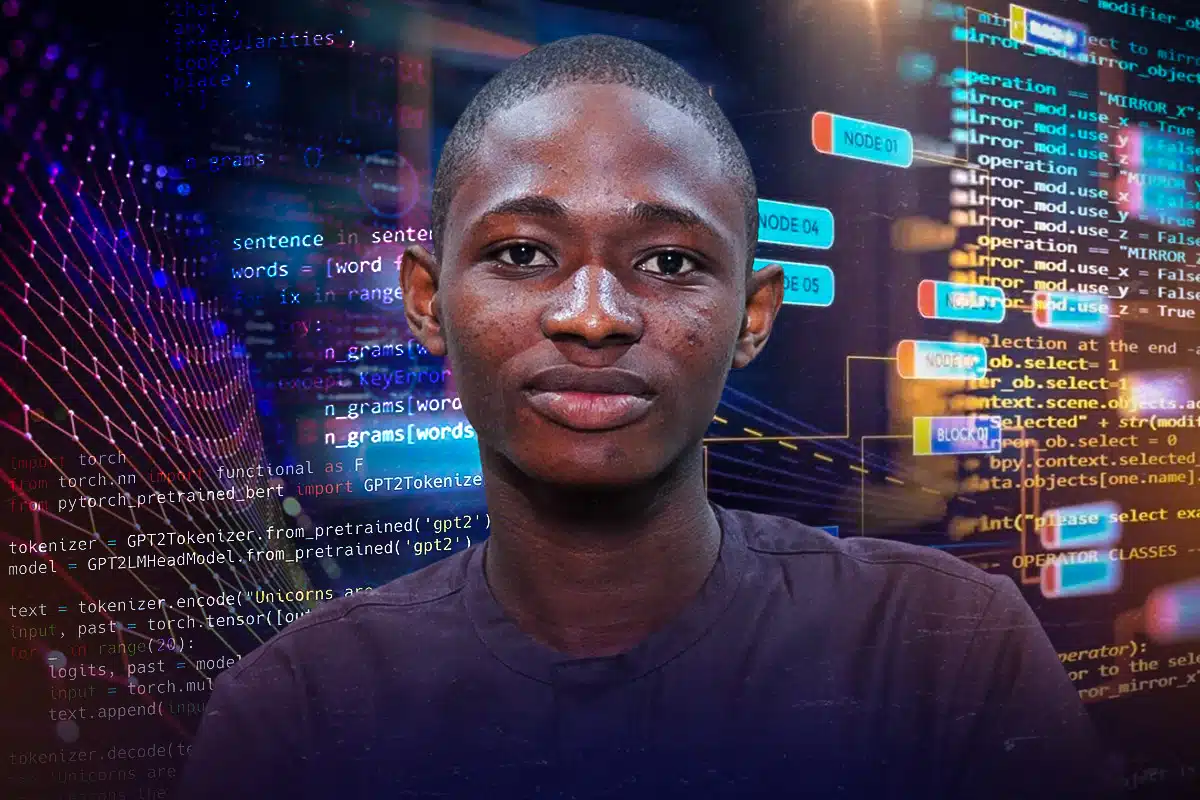
In a remarkable leap for artificial intelligence in Nigeria, University of Lagos (UNILAG) student Saheed Azeez has developed YarnGPT, a groundbreaking text-to-speech (TTS) AI model that reads aloud in an authentic Nigerian accent.
A Passion for AI Innovation
Azeez first gained attention in November 2024 when he created NaijaWeb, a dataset of 230 million GPT-2 tokens based on discussions from Nairaland. At the time, he downplayed the complexity of the project, describing it as “just web scraping.” However, his latest endeavor, YarnGPT, showcases an even more ambitious leap into AI-driven speech technology.
“In the global AI landscape, lifelike voice synthesis is becoming common, but creating a model that accurately captures the nuances of a Nigerian accent is a major technical feat,” Azeez explains.
Challenges and Breakthroughs in Building YarnGPT
Building an AI model that truly reflects Nigerian speech patterns required extensive data collection and rigorous algorithmic refinement. Azeez leveraged audio from Nigerian movies, extracting both speech and subtitles, but soon encountered a challenge: low-quality transcriptions and inconsistent audio data.
“The biggest problem with AI development in Nigeria is access to high-quality data,” Azeez notes. “Replicating foreign AI models isn’t impossible, but the lack of structured datasets makes it incredibly difficult.”
To overcome this, he turned to Hugging Face, an open-source machine learning platform, integrating their high-quality datasets with his Nigerian audio samples to train YarnGPT.
Overcoming Technical and Financial Barriers
Training AI models requires significant computing power. Without personal access to a high-performance GPU, Azeez initially relied on Google Colab, spending $50 (₦80,000) in cloud credits—only for the model to fail.
“The first attempt didn’t work, and the cloud credits were wasted. It was frustrating,” he recalls.
Determined to find another way, he studied Oute AI’s autoregressive text-to-speech models, which generate words one at a time in a predictive sequence—similar to how ChatGPT forms sentences. Implementing this approach, he adapted SmolLM2-360M, a language model from Hugging Face, and incorporated speech functionality, requiring complex algorithmic modifications. The final training process lasted three days and cost another $50.
The Science Behind YarnGPT: Tokenizing Nigerian Speech

Large Language Models (LLMs) process information numerically through tokenization—breaking down words into smaller segments assigned numerical values. However, tokenizing audio is vastly different.
“Unlike text, which has clear breaks between words, audio is continuous,” Azeez explains. “The AI has to convert sound waves into structured sequences the model can process, like assembling tiny puzzle pieces into a full speech pattern.”
By employing advanced wave tokenization techniques and utilizing Nigerian linguistic datasets, Azeez successfully trained YarnGPT to read aloud in Nigerian English, as well as Yoruba, Hausa, and Igbo.
YarnGPT Goes Viral
Despite being a self-proclaimed “nerd,” Azeez knew that technical brilliance alone wasn’t enough—he needed public attention. With the help of friends, he shot a two-minute demo video showcasing YarnGPT in action. The clip quickly gained traction on social media, garnering 138,000 views on X (formerly Twitter) and attracting industry leaders like Hellicarrier Co-founder Timi Ajiboye.
Creating the video, however, came with its own set of hurdles.
“I called my friend Aremu, who helps with logistics, and told him we needed to make a video. We borrowed a camera from another friend, used someone else’s house as a backdrop, and even rearranged their living room,” he laughs. “Their mom wasn’t too happy when she got back.”
The effort paid off. YarnGPT’s popularity surged, with users praising its ability to pronounce Nigerian names correctly and read in multiple local languages. Potential applications include:
- Content Creation: Voice-overs for videos, audiobooks, and advertisements in Nigerian accents.
- Navigation Systems: Localized voice directions for platforms like Google Maps.
- Accessibility Tools: AI-powered speech assistance for non-English speakers.
Nigeria’s AI Future: A Long Road Ahead
Despite the ingenuity of developers like Azeez, Nigeria lags behind in the global AI race. While the U.S. government has committed over $500 billion to AI development, Nigeria’s investments remain minimal.
Azeez acknowledges the gap but remains optimistic.
“We’re far behind, no doubt. The leading AI models today—OpenAI’s, China’s—are trained with vast computational resources we simply don’t have. But I believe there’s a way forward. Instead of reinventing the wheel, we should focus on localizing AI for Nigerian needs—building models that serve our own languages and accents.”
His vision aligns with Nigeria’s growing interest in AI. Minister of Communications and Digital Economy, Bosun Tijani, has emphasized the country’s ambition to become a key player in artificial intelligence. With talents like Azeez pushing boundaries, the future of Nigerian AI innovation is promising.
YarnGPT stands as a testament to Nigerian ingenuity—proof that innovation thrives even with limited resources. As Azeez continues refining his model, the question remains: will Nigeria step up to support homegrown AI talent, or will these breakthroughs remain passion projects?
For now, one thing is certain: the world is listening, and YarnGPT is making Nigeria’s voice heard.



Three Ekiti Students Win Big at 2026 Future Agenda Awards
Three teenage students from St. Lawrence Metropolitan College, Ado Ekiti, have clinched top honours for academic excellence at the 2026...


Venite University Appoints Prof Charity Aremu as Vice-Chancellor
Venite University, Iloro-Ekiti, has appointed Professor Charity Aremu as its new Vice-Chancellor after a competitive selection process that drew 25...


Oyebanji Insists on Effective NFWP-SU Implementation in Ekiti
Ekiti State Governor Biodun Abayomi Oyebanji has reaffirmed his administration’s commitment to women’s economic empowerment, declaring that effective implementation of...


Hon. Akinlayo Rallies Ekiti Voters to Re-Elect Oyebanji, Afuye
A member of the House of Representatives, Hon. Kolawole Davidson Akinlayo, has urged voters in Ekiti State to return Governor...


EKSU Alumnus, Oluwatosin Ajayi Empowers 220 Widows in Ekiti
An alumnus of Ekiti State University, Mr Oluwatosin Sunday Ajayi has disbursed ₦4.4 million in direct cash support to 220...


Ekiti First Lady Unveils Roadmap to Boost Women’s Political Power
The First Lady of Ekiti State, Her Excellency Dr. Olayemi Oyebanji, has unveiled a bold roadmap to deepen women’s political...


Ekiti ministries unite to expand women’s economic empowerment programme statewide
Women-focused economic reforms gained fresh momentum on Monday as the Ekiti State Ministry of Women Affairs and Social Development and...


Prince Ejioye Applauds Oyebanji’s Double Awards, Says Ekiti Youth Winning
Ekiti State Governor, Biodun Abayomi Oyebanji, has secured back to back Governor of the Year awards from Leadership Newspaper and...


Ekiti Government Expands Disability Support With Food, Cash Across State
Ekiti State Government has begun statewide distribution of food items and cash assistance to persons with disabilities (PWDs), reinforcing Governor...


Fayemi’s Legacy, Ekiti Development Dominate Afenifere Renewal Group Colloquium
A high-level colloquium in Ado-Ekiti on Tuesday placed the legacy of former Ekiti State Governor, Dr John Kayode Fayemi, at...
-

 Trending News5 months ago
APC Chieftain, Mobolaji Adeyeye Rallies Ekiti Members Ahead of October 27 Primary, Endorses Oyebanji for Second Term
-

 Entertainment7 months ago
5 Cultural Festivals to Look Forward to in Ekiti this August
-

 Trending News1 year ago
Wizkid Cautions Lookalike, Gifts Him ₦40 Million to Build His Own Identity
-

 Trending News12 months ago
Lent 2025 Begins Today with Ash Wednesday
-

 Trending News5 months ago
Akinlayo Hails Tinubu’s Leadership, Rallies Support for Oyebanji as Nigeria Turns 65, Ekiti 29
-

 Trending News1 year ago
Hon. Akinlayo Disburses ₦15M, Promotes 90 Aides to Personal Assistants
-

 Trending News6 months ago
Mobolaji Adeyeye Calls on APC Members to Uphold Democracy & Progressive Values Ahead of Ekiti Primary Election
-

 Trending News7 months ago
Venite University Opens 2025/2026 Admission Portal, Releases Cut-Off Marks and Courses