
Politics
Babangida Points Finger at Abacha for June 12 Annulment, Admits Regret

Politics
Erelu Bisi Fayemi Condemns Senate’s Treatment of Senator Natasha, Calls It a War Against Women in Power
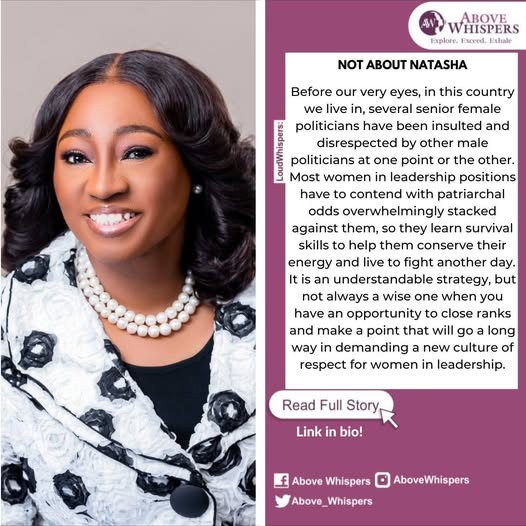

Renowned feminist and former First Lady of Ekiti State, Erelu Bisi Fayemi, has strongly criticized the Nigerian Senate over its handling of Senator Natasha Akpoti-Uduaghan’s allegations of sexual harassment against Senate President Godswill Akpabio. Fayemi described the events as a deliberate attempt to silence women in leadership, warning that the issue goes beyond one senator and reflects a wider culture of intimidation and misogyny.
Speaking on the controversy, Fayemi expressed disappointment in how the situation unfolded, particularly the lack of solidarity from fellow female politicians. “What happened in the Senate was not just about Natasha. It is about the systemic war against women in power,” she stated.
The incident began when Senator Akpoti-Uduaghan, representing Kogi Central, attempted to speak during a session but was denied recognition. After refusing to move to a newly assigned seat, she made allegations of sexual harassment against Akpabio on national television. The fallout was immediate. Rather than investigate the claims, the Senate quickly moved to suspend her for six months, stripping her of all legislative privileges.
Fayemi criticized the Senate’s approach, pointing out that instead of addressing the allegations fairly, the institution focused on discrediting Akpoti-Uduaghan. She also condemned the response from female senators, including Senator Ireti Kingibe and former senators Abiodun Olujimi and Florence Ita-Giwa, for failing to stand by their colleague.
“It was painful to watch women in leadership miss an opportunity to challenge the culture of intimidation that so many of us have had to endure,” Fayemi remarked. She also took issue with Ita-Giwa’s claim that “no one can harass a female senator,” citing past incidents where female politicians faced open threats and public humiliation.
She recalled the 2016 case of former Senator Dino Melaye, who threatened to assault and impregnate Senator Oluremi Tinubu in the Senate chamber, a statement that sparked outrage but carried no consequences. “This is the same impunity that allows powerful men to humiliate and silence women when they refuse to conform,” Fayemi noted.
The backlash against Akpoti-Uduaghan escalated when Senator Peter Nwebonyi, Deputy Chief Whip, went on television to attack her personal life, suggesting that because of the number of children she has or the men she has been with, her allegations should not be taken seriously. Fayemi described his comments as a blatant example of the misogyny that women in leadership face.
The situation worsened when a group of female protesters took to the streets, denouncing Akpoti-Uduaghan for being “stubborn.” Fayemi dismissed their stance, arguing that their words only mirrored the views of those in power who expect women to be silent and obedient.
Reflecting on the events, Fayemi stated that the Senate’s handling of the issue was a calculated effort to humiliate and punish Akpoti-Uduaghan. She noted that suspending a senator for six months directly contradicts court rulings that prohibit legislative suspensions exceeding 14 days.
“The message is clear—any woman who refuses to play by the rules set by men will be dealt with,” she warned. “But this fight is not just about one woman. It is about the constant battle women in power face, the scrutiny of their personal lives, and the expectation that they must shrink themselves to survive.”
As Nigeria marked International Women’s Day, Fayemi called for a deeper conversation about gender equality in leadership. “The question is not whether Natasha is right or wrong,” she said. “The question is, how much longer will we allow ourselves to be silenced?”


Ekiti Disburses N234m to 142 Women Groups Under NFWP-SU Federal Programme
More than 25,000 women in Ekiti State are set to benefit from a major economic empowerment initiative after the Federal...


APC Primary Controversy Sparks Fresh Debate in Ekiti North
A political analyst and APC stakeholder, Elder Adigun Otaomokunola, has raised concerns over the conduct of the All Progressives Congress...


Venite University College of Law Opens Academic Recruitment Exercise
Venite University, Iloro-Ekiti, has opened applications for a wide range of academic positions within its College of Law, calling on...


FoodBank4u Changes How Ibadan Families Shop for Groceries
Thousands of households in Ibadan are increasingly turning to online grocery delivery as rising traffic congestion, long market queues and...


Ekiti Inclusion Reforms Draw National Attention at Lagos Conference
Ekiti State’s disability inclusion and special education reforms received national recognition at the 2026 National Inclusion Conference in Lagos, where...


Ekiti Students Demand Release of Former EKSU Union Leader, Sugarito
Tension spread across the student community in Ekiti State on Friday as students and stakeholders demanded the immediate release of...


Hon. Dapo Kolawole Donates N10m as BAO Campaign Storms Ijero-Ekiti After N25m Constituency Grant
Hon. Dapo Kolawole on Monday donated N10 million on behalf of the Iloro-Ekiti community to support the re-election campaign of...


Fayemi Celebrates Fasoranti at 100, Calls Him Moral Voice of Yoruba Nation
Former Ekiti State Governor, Kayode Fayemi, has described Afenifere leader, Reuben Famuyide Fasoranti, as a towering symbol of integrity and...


Owolabi Clears Screening for Ekiti North Senatorial Race
Otunba Oluwadare Owolabi, popularly known as Ìràwò Òwúrò, has cleared the screening process ahead of the forthcoming elections in Ekiti...


Ekiti 2027: Barr Kolade Picks APC Form for Reps Contest
Barrister Victor Olumuyiwa Kolade has formally entered the race for the Ekiti Central Constituency II seat in the House of...
-

 Trending News8 months ago
APC Chieftain, Mobolaji Adeyeye Rallies Ekiti Members Ahead of October 27 Primary, Endorses Oyebanji for Second Term
-

 Entertainment10 months ago
5 Cultural Festivals to Look Forward to in Ekiti this August
-

 Trending News1 year ago
Wizkid Cautions Lookalike, Gifts Him ₦40 Million to Build His Own Identity
-

 Trending News8 months ago
Akinlayo Hails Tinubu’s Leadership, Rallies Support for Oyebanji as Nigeria Turns 65, Ekiti 29
-

 Trending News1 year ago
Lent 2025 Begins Today with Ash Wednesday
-

 Trending News1 year ago
Hon. Akinlayo Disburses ₦15M, Promotes 90 Aides to Personal Assistants
-

 Trending News9 months ago
Mobolaji Adeyeye Calls on APC Members to Uphold Democracy & Progressive Values Ahead of Ekiti Primary Election
-

 Trending News10 months ago
Ekiti TESCOM invites shortlisted candidates for oral interview and micro teaching in August 2025